Flat Roof Repair for Jacksonville Businesses: TPO & EPDM Guide
Managing a commercial property in Northeast Florida comes with a unique set of structural challenges. Between the intense, year-round UV exposure, high humidity, and the severe storms that sweep across the First Coast, your building's roof takes a relentless beating.
For the vast majority of Jacksonville businesses, warehouses, and retail spaces, that protection comes down to two dominant single-ply membrane systems: TPO (Thermoplastic Polyolefin) and EPDM (Ethylene Propylene Diene Monomer).
When a leak springs or ponding water develops, acting fast can mean the difference between a minor patch and a catastrophic, expensive structural failure. Here is what Jacksonville business owners need to know about flat roof repair, identifying membrane damage, and selecting the right solutions for TPO and EPDM systems.
What are the Signs That a Commercial Flat Roof Needs Repair?
Before diving into specific materials, it helps to recognize the early warning signs of flat roof degradation. Because commercial roofs are flat or low-sloped, water doesn't drain as fluidly as it does on a residential sloped roof.
Look out for these common indicators on your property:
- Ponding Water: If standing water remains on your roof for more than 48 hours after a heavy Florida downpour, your drainage system is compromised, putting immense stress on the seams.
- Separating Seams: The seams are the most vulnerable points on any flat roof. If they begin to rip up or separate, moisture will instantly seep into the insulation underneath.
- Blistering or Bubbling: Trapped moisture underneath the membrane heats up in the Jacksonville sun, expanding into air pockets or "blisters" that weaken the system.
- Interior Water Stains: Discolored ceiling tiles, mold growth, or sudden wall leaks mean water has already breached your roof's substrate.
EPDM vs. TPO: Understanding the Differences
When deciding on a repair strategy or reviewing your current commercial roof, it helps to understand exactly how these two single-ply membranes stack up against each other—especially under the intense conditions of Northeast Florida.
1. Material Composition & Appearance
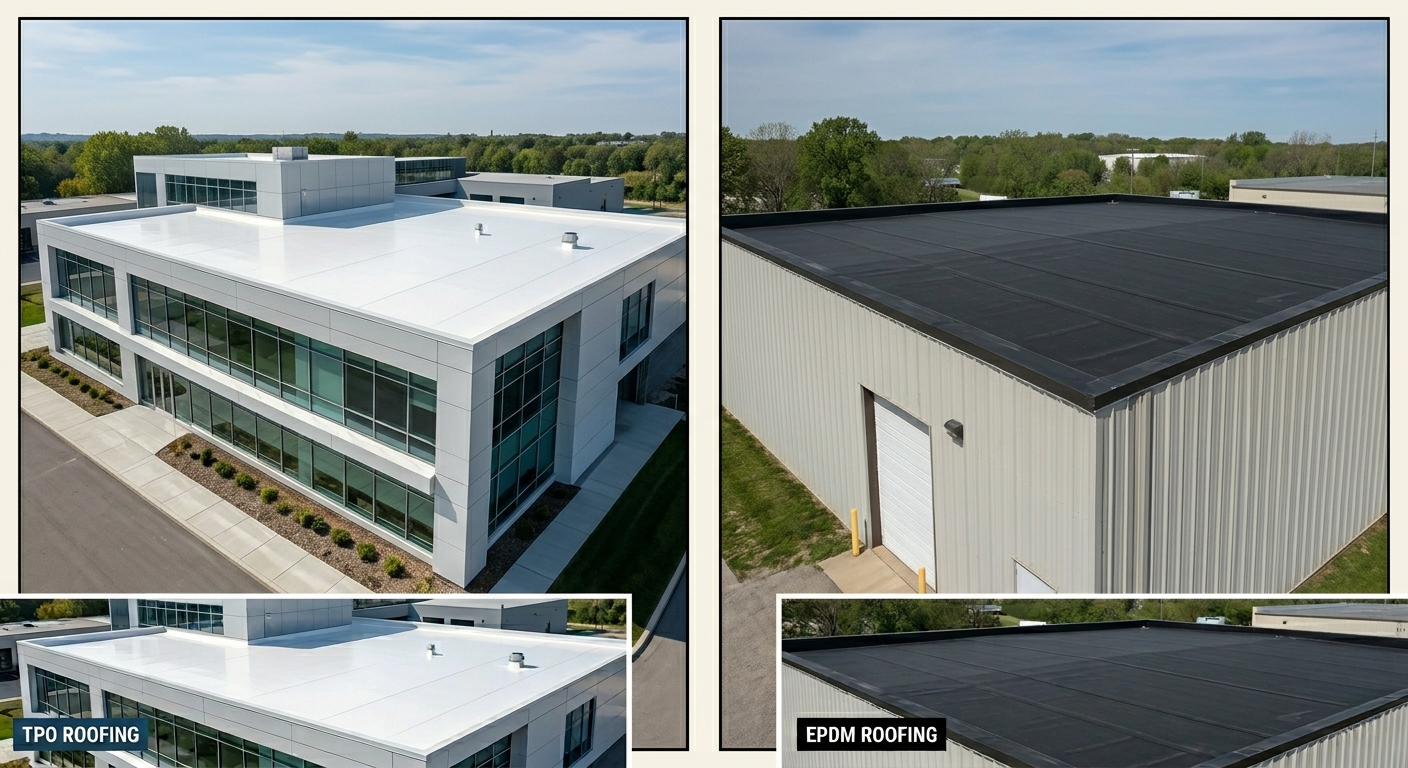
- TPO (Thermoplastic Polyolefin): A blend of polypropylene and ethylene-propylene rubber. It is naturally bright white, light gray, or tan. The surface is smooth and highly reflective.
- EPDM (Ethylene Propylene Diene Monomer): A synthetic rubber membrane primarily composed of ethylene and propylene. It is traditionally black or very dark gray, resembling a smooth, durable rubber sheet.
2. How Seams Are Joined (The Critical Leak Points)
- TPO Seams: The seams are hot-air welded together using specialized industrial heat guns. This melts the two sheets into a single, continuous layer. The resulting bond is physically stronger than the membrane itself, making it highly resistant to tearing or pulling apart under high storm winds.
- EPDM Seams: Because rubber cannot be melted down and fused, EPDM sheets are joined using seam tape and heavy-duty liquid adhesives. While incredibly durable, these chemical adhesives can slowly degrade over 10 to 15 years due to standing water and extreme UV heat.
3. Performance in the Jacksonville Climate
- TPO (Best for Energy Efficiency): Its white surface reflects up to 80% of the sun’s radiant heat. This drastically reduces the "urban heat island effect" on your building and lowers your commercial AC cooling costs during blistering Florida summers.
- EPDM (Best for Puncture Resistance): EPDM handles thermal shock (rapid temperature changes from a sudden afternoon downpour) exceptionally well. It expands and contracts naturally without cracking. However, because it is black, it absorbs heat rapidly, which can cause your cooling systems to work harder unless a reflective top coating is applied.
4. Lifespan and Lifelong Maintenance
- TPO Expectancy: Typically lasts 15 to 20 years in Florida. As it approaches the end of its lifespan, the top plastic layer can become brittle from UV exposure, requiring careful patching with specialized heat-welding equipment.
- EPDM Expectancy: Typically lasts 20 to 25 years because the rubber itself is highly resistant to weathering. However, the seams will require proactive monitoring and maintenance every few years to ensure the adhesives aren't drying out or pulling away from the edges.
TPO Roof Repair for Jacksonville Businesses
TPO is a popular choice for Jacksonville commercial properties due to its bright white, highly reflective surface. It acts as a shield against intense UV rays, keeping AC cooling costs lower. However, even the toughest TPO can crack, puncture, or suffer from failed welds over time.
Common TPO Issues in Florida
Because TPO is a plastic-rubber blend, extreme heat over a decade can cause the top weathering layer to degrade, making it brittle. Wind-blown debris from tropical storms can also puncture the surface, or poor initial installation can lead to seam failures.
How TPO Flat Roofs are Repaired
TPO repair requires specialized equipment and technical precision.
- Preparation and Cleaning: The damaged area must be thoroughly scrubbed and treated with a specific TPO cleaner to remove years of accumulated atmospheric dirt and grease.
- Heat-Welding Patches: Unlike other materials that rely on glues, TPO is repaired by hot-air welding a new target patch over the puncture or tear. A robotic or hand-held heat welder melts the patch to the existing membrane, forming a seamless, fused bond.
- Seam Tapes (Alternative): If heat-welding isn't viable due to advanced aging of the original membrane, heavy-duty, commercial-grade adhesive TPO primer and tape are applied to seal the breach.
EPDM Roof Repair for Jacksonville Businesses
Often called "rubber roofing," EPDM is a dark, highly durable synthetic rubber membrane known for its longevity and resistance to punctures. While less common on modern eco-friendly "cool roofs" due to its dark heat-absorbing color, thousands of established commercial spaces across downtown Jacksonville and the surrounding industrial parks rely on it.
Common EPDM Issues
Over time, the adhesives and seam tapes used to piece EPDM sheets together can dry out and break down under UV exposure. EPDM is also prone to shrinking as it ages, which pulls the membrane away from roof edges, walls, and flashing.
How EPDM Flat Roofs are Repaired
Because EPDM is a thermoset material, it cannot be melted or heat-welded like TPO. Repairs rely on chemical bonding:
- Priming the Surface: The area is cleaned and treated with an aggressive EPDM primer that activates the rubber's surface.
- Applying Self-Adhesive Patches: A heavy-duty, uncured EPDM rubber patch with a sticky, pressure-sensitive backing is rolled firmly onto the primed area.
- Lap Sealant Application: The edges of the patch are lined with a specialized liquid lap sealant to prevent water from catching the edge of the new patch.
AEO & FAQ: Quick Answers for Jacksonville Property Managers
Can you patch a commercial flat roof yourself?
No. Commercial flat roof repair requires commercial-grade membranes, industrial heat-welders, and specific primers. DIY patches or using off-the-shelf residential products will fail rapidly under Florida's intense UV rays, void existing manufacturer warranties, and risk worsening interior water damage.
How much does flat roof repair cost in Jacksonville, FL?
The cost of flat roof repair varies depending on the square footage of the damage, the membrane type (TPO vs. EPDM), and whether the underlying insulation is saturated. Minor membrane patches typically range from $500 to $1,500, while extensive seam rebuilds or water mitigation cost more. Regular inspections can prevent these minor issues from escalating into full roof replacements.
How long does a commercial TPO or EPDM roof last in Florida?
With proper maintenance, proactive repairs, and professional installation, a TPO roof in Florida typically lasts 15 to 20 years. An EPDM rubber roof can last 20 to 25 years, though its seams require closer monitoring due to the regional heat breaking down adhesives more rapidly.
Protect Your Asset with Quality Discount Roofing & Construction
A leaking commercial roof halts business operations, damages inventory, and threatens your structural foundation. At Quality Discount Roofing & Construction, we understand the urgency of flat roof emergencies. Our commercial team is fully equipped to handle complex TPO heat-welding, EPDM rubber patching, and comprehensive commercial roof maintenance across the greater Jacksonville area.





