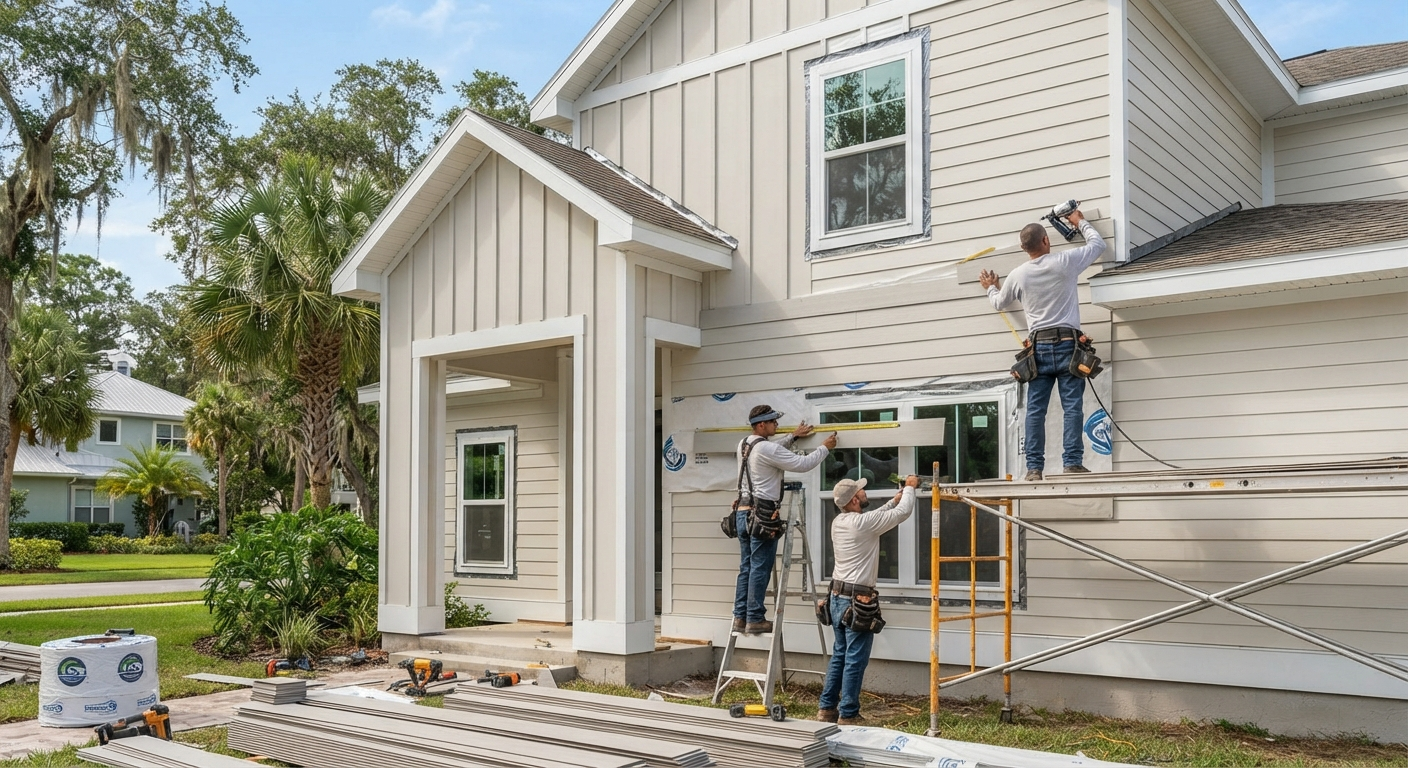
Siding Installation Details That Matter for Coastal Homes in Palm Coast, Florida
November 25, 2026
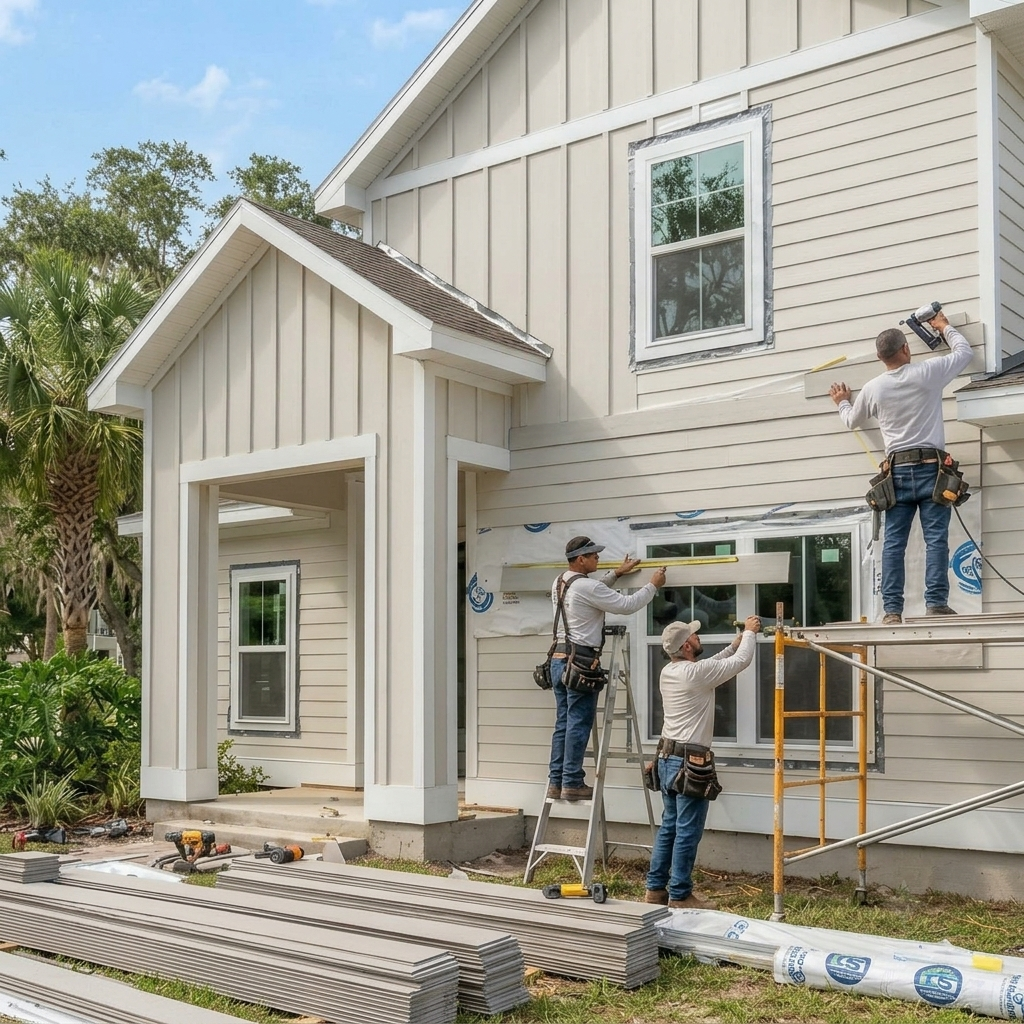
Though it adds beauty and style to your home, your home's siding does more for you than just boost its curb appeal. It will serve to defend your outside walls, assist with moisture control, and help to keep your home sturdy and long-lasting. If you happen to live in Palm Coast, Florida, you will need to watch out for salt air as well as heat and humidity.
Building a Residential Siding Installation Palm Coast project that is properly designed takes into account factors like the structure of your home, geographical location, material choices and installation techniques. Having this information can help homeowners make the right choices and have a well-functioning exterior.
1. Know the Coastal Conditions Prior to Installing
Exterior conditions can subject homes to greater stress than the materials can handle. In Palm Coast, for example, high humidity, rain, coastal winds and the salt from the ocean air can all accelerate exterior damage if the right siding isn't used and installed.
Before embarking on a residential siding installation palm coast project, contractors should evaluate the exposure of the property and its current exterior condition. Houses with more exposure to wind-driven rain, for example, may need careful attention to flashing, joints and water-management details.
A thorough evaluation will also help to uncover damaged areas, dips, rough spots, or even potential moisture problems. Addressing these issues prior to construction will give you the proper starting point for the new siding.
2. Choosing Siding Materials for Florida Homes
Material can significantly impact the look, maintenance, and performance of your home's exterior over time. As a homeowner, think about the longevity, moisture resistance, and the upkeep of your home's material, alongside its style.
There are many types of siding to choose from, but these two types are especially popular for residential structures due to their wide range of color and style options and lower maintenance needs. Fiber cement siding is also common with its comparable wood-looking qualities.
There are a number of options when choosing material to install residential siding Palm Coast will depend on the type of home that you have, the budget you have, and whether your house is placed in the sun or rain.
3. Preparing the Exterior Wall Surface
Good installation starts even before one siding panel goes on. Check the current exterior to see if loose shingles and siding, rotted wood or areas where moisture has penetrated can be found.
Correct preparation could require the removal of existing siding, reconditioning of the wall beneath, and making sure the walls are proper for the preferred material. Contractors should check the condition of the house wrap or other accepted water-resistive barrier.
If you're residential siding installation Palm Coast, this step is necessary for the same reason: covering up a problem doesn't fix it. A compromised wall or an unaddressed moisture issue could interfere with how the new exterior system performs.
4. Why Care About Moisture Control
Rainwater management is a key concern for many coastal homes. As beautiful and as protective as siding can be on the exterior of a home, don't forget that it is not meant to be entirely water proof.
Pay extra attention to door and window openings, transitions between the roof and wall, corners and anywhere there is an opening or transition. Make sure that flashing is installed so that water is diverted away from these vulnerable areas in accordance with the applicable building code and product label.
The job of Palm Coast residential siding installation that can be considered reliable should also include plans for drainage routes and suitable clearances along the foundation and other exterior features. This minimizes the potential of moisture being trapped, causing related damage.
5. Correct Fastening and Panel Placement
Fastenings can affect durability. Each type of siding requires a specific kind of fastening, as well as a certain spacing, placement and clearance of fastenings during installation.
If you're using vinyl siding, it has to be installed with space for its expansion and contraction as the weather changes. Fasteners should be used according to the manufacturer's specifications rather than pressed tightly against the panel. Fiber cement products also need a specific fastening technique and spacing for the product.
When it comes to residential siding installation Palm Coast, think straight, even lines, well-secured siding, and clean panel transitions. Proper installation will help ensure the exterior looks good while the materials work properly.
6. How To Protect Your Siding At Windows, Doors, & Rooflines
Pay close attention to the transitions where siding interfaces with other exterior elements. Good detail is important where the siding meets windows, doors, vents, corners, and roof lines.
Flashing, sealants, trim and clearances should be selected and installed to work with the materials and building conditions. Sealants should not be used as a repair for otherwise inadequate flashing or drainage details.
Once complete, a professional residential siding installation Palm Coast company will review these connection points as part of the entire project. Each gap and corner that is finished off should look clean and provide a tight seal for the outside.
7. Choosing Experienced Siding Professionals
To receive full performance benefits from quality products, they must be installed properly. Supervision of the installation, so it is not hurried or the finished work is left incomplete, is necessary for even the best products. The homeowner should get a contractor who is knowledgeable about exterior residential systems and follows the manufacturer's installation instructions and local building codes.
Before beginning a residential siding installation Palm Coast, ask about the materials, preparation, moisture-management system, projected timeline, and the warranty. Find out what exactly will be part of the written estimate and how unforeseen repairs will be managed.
We do exterior upgrade work for our home owners that would like to have professional assistance with the roofing, siding, windows, and gutters of the property.
8. Maintaining Siding After Installation
By keeping up with routine maintenance, you can take care of minor issues before they turn into more costly repairs. Annually or semi-annually check your siding for loose panels, cracks, nicks or damage, gaps, and moisture intrusion.
Cleaning depends on your siding material, so be sure to follow the manufacturer's instructions. Don't use high-pressure water or techniques that could damage the surface or force water behind the panels.
If you got the residential siding installation Palm Coast project at your home, you might also want to save the product data, the warranty documents, and the installation data.
Creating a More Robust Exterior for Your Palm Coast House
A good siding installation involves more than selecting a color, or even a material. Wall treatment, moisture deflection, flashing, fastening, and craftsmanship all come together to create the finished exterior.
When getting residential siding installation Palm Coast, homeowners need to think about all aspects of the installation and how it contributes to the home's best interest. It is worth spending time analyzing materials, the process, and finding experts to partner with for the best results.