Signs Your Siding Needs Replacement in Palm Coast and Jacksonville, FL
January 12, 2026
Siding isn't just cosmetic; it protects your home or commercial building from rain, moisture, pests, and energy loss. In places like Palm Coast and Jacksonville, Florida, the strong sunlight, high humidity, and heavy seasonal rainfall can put extra wear on siding. Recognizing the signs early will save you from extensive damage and costly repairs.
Below are common Q&A signs that indicate that siding on a house or building needs replacement.
Q 1:
What are the physical signs that there is a siding damage?
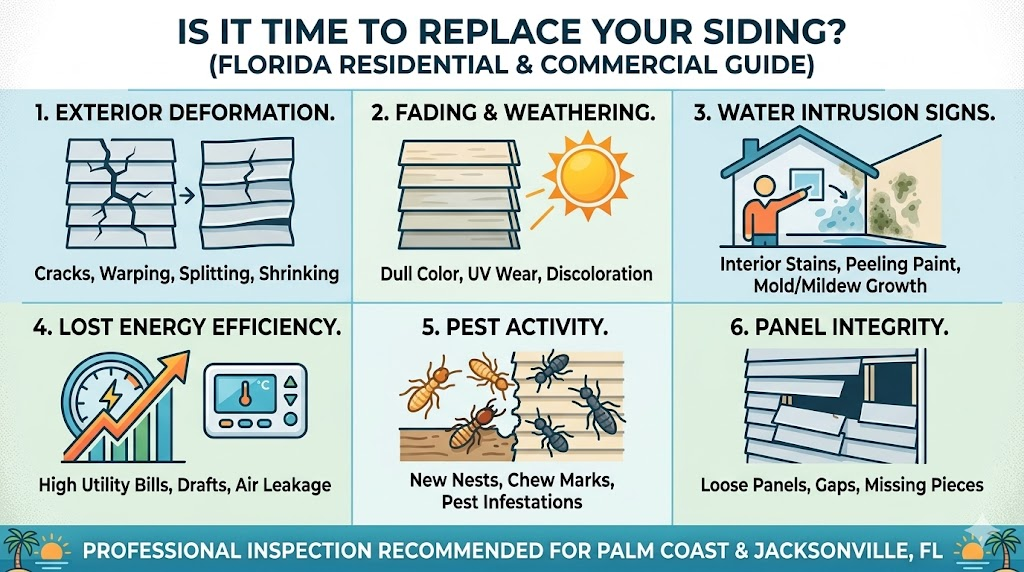
Answer: Watch for cracks, warping, splitting or shrinking in side panels. These distortions often indicate that the material deteriorates or that water seeps below the surface. Any siding that no longer lies flat against the wall can permit moisture intrusion and if left untreated, can lead to deeper structural problems.
Q 2: In what way can color fading or discoloration be a problem?
Answer: Siding that is subjected to UV radiation and weather must retain its color and its protective layer. If the siding appears dull or has become discolored in spots, then the weather tightness is most likely compromised. This can affect protection and may serve as an indicator that your siding is close to the end of its life cycle.
Q 3: Could mold or mildew growth indicate that siding should be replaced?
Answer: Yes. Mold, mildew, or rot—particularly dark spots or fuzzy growth— generally means moisture has penetrated behind the siding. This not only damages the siding, but can also compromise the underlying structure and air quality of the building. Professional assessment is recommended if fungal growth is visible.
Q4: What are the internal signs of siding failure?
Answer: Siding issues can also manifest on the interior of your home. If you notice peeling paint, bubbling wallpaper, or water stains on interior walls, this is often evidence of water ingress from exterior walls. This is one surefire indication that your siding is no longer able to provide adequate protection.
Q 5: Can my electricity bills tell something about siding problems?
Answer: Absolutely. Siding is also an insulation layer of sorts. If you find that your heating or cooling costs rise substantially without your usage changing, the siding is not sealing properly anymore. Cracks, holes and deteriorated materials allow conditioned air to escape, thereby forcing your HVAC system to work harder.
Q 6: What should I look for regarding pest activity?
Answer: Damaged siding allows insects and rodents entry. If you start to notice increased insect activity, chew marks, or nests in or around the siding it is a sign that the siding is in failure and needs to be replaced. Insects take advantage of holes made by cracks, rot, or deformity.
Q 7: Does frequent grouting indicate that my siding is inefficient?
Answer: Yes. If you're painting or sealing the siding more often than usual-especially because the paint is flaking or peeling-it's a sign that the siding's protective layer has worn down. While the use of paint often gives a temporary improvement in appearance, peeling that persists commonly is a sign that the siding material itself is failing.
Q8: Why is it important to have loose or missing side panels?
Answer: loose, broken, or missing panel compromises the protective coating on a building. These holes allow water, insects, and air to infiltrate and can quickly cause damage to the inside walls and structures. Replacing these damaged panels quickly helps prevent further and more costly problems.
Q 9: How does Florida's climate affect siding life?
Answer: Intense UV radiation, heat, and humidity all take their toll on siding materials in Florida, as does heavy seasonal rainfall. What this means is that the material will fade, warp, crack, and lose some of its important protective qualities much more quickly than it would in milder climates, making timely siding replacement particularly important around Palm Coast and Jacksonville.
Q10: Are commercial properties that need siding replacements replaced earlier than residential?
Answer: Commercial buildings often have larger open areas and more complex insulation requirements. Repeated exposure to sun, humidity and HVAC cycles means siding can deteriorate quickly, affecting energy efficiency and tenant comfort. If your commercial building shows many of the above signs, replacement is generally more cost-effective than ongoing repairs.
Conclusion: Watch out for the Red Flags.
Be it a cozy residence in Palm Coast or a lucrative business in Jacksonville, siding is a vital barrier against the weather and environmental stresses of Florida. By recognizing these signs, the ability to take swift action will help in enhancing your property's structure, insulation, energy efficiency, and curb appeal.
Are you experiencing any of these sidetracking issues? Some of the sidetracking issues you'll be experiencing include: Contact Quality Discount Roofing & Construction
USA today for professional insulation and a customized replacement solution for your home or commercial property.





