What is Roof Sheathing and Why It Matters in Jacksonville
When thinking about a roof replacement, most homeowners focus on the visible exterior layers like asphalt shingles, metal panels, or architectural tiles. However, the true strength of your roof lies hidden directly beneath those materials. It’s called roof sheathing (also known as roof decking), and for homes in Jacksonville, Florida, it is arguably the most critical component of the entire roofing system.
Between Northeast Florida’s intense summer heat, high humidity, and annual tropical storm threats, your roof sheathing bears a massive burden.
Here is a breakdown of what roof sheathing is, the distinct types used, and exactly why it matters for your Jacksonville home.
What is Roof Sheathing?
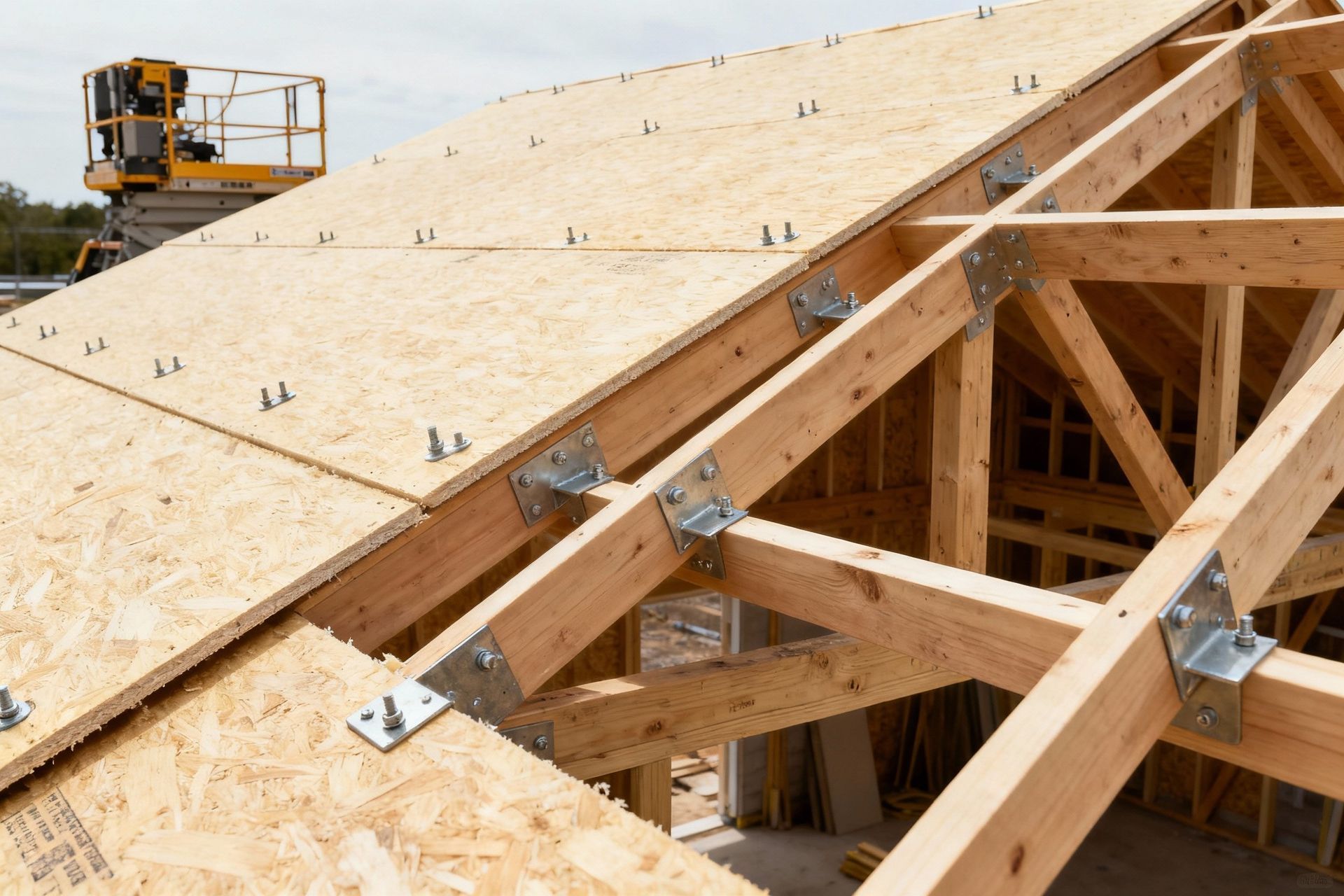
Roof sheathing refers to the sturdy layer of wooden boards that are fastened directly to your home’s structural rafters or trusses. It forms a solid, flat surface across the entire expanse of your roof, serving as the essential structural foundation upon which your underlayment, water barriers, and final shingles are securely nailed.
The Core Types of Roof Sheathing Materials
When local roofing contractors inspect or replace your deck, they generally work with two primary types of modern engineered wood:
- OSB (Oriented Strand Board): Made by compressing layers of wood strands together with waterproof resin adhesives. OSB is highly popular due to its excellent structural uniformity, cost-effectiveness, and availability in large, dense sheets.
- Plywood: Created by layering thin sheets of solid wood veneer cross-grained and glued under high pressure. Plywood is exceptionally strong, lightweight, and handles moisture exposure well by expanding and drying out evenly without losing its structural integrity.
In older historic areas of Jacksonville, such as Riverside, Avondale, or San Marco, you might also find tongue-and-groove or spaced board sheathing. When updating these historic homes to meet current modern building safety codes, these older boards often need to be overlaid with fresh OSB or plywood.
Why Roof Sheathing is Critical for Jacksonville Homes
Living on the First Coast brings a unique set of coastal environmental challenges. Your roof sheathing acts as your home's primary shield against these four regional threats:
1. Hurricane Wind Resistance & Structural Load
During a major tropical storm or hurricane, strong winds rushing over your roof create a powerful lifting force. If your roof sheathing is rotted, thin, or improperly nailed down, the wind can literally rip the shingles and the decking right off the trusses. Solid, code-compliant sheathing distributes this intense wind pressure evenly across your home’s framing, holding your structure together.
2. The Battle Against High Florida Humidity
Jacksonville’s infamous humidity can wreak havoc on your attic space. If your attic lacks proper ventilation, moisture builds up on the underside of your roof deck. Over time, this consistent dampness leads to wood rot, warping, and sagging. Rotted sheathing loses its ability to hold nails, meaning your shingles can easily blow away in a standard afternoon thunderstorm.
3. Preventing Dangerous Mold and Mildew
When roof decking absorbs moisture from local leaks or trapped humidity, it becomes a breeding ground for toxic mold and mildew. This not only destroys the wood itself but can also compromise the indoor air quality of your home as spores travel down through your ceiling insulation and AC vents.
4. Anchoring the Entire Roof System
Your final shingles or metal roof are only as strong as the wood they are fastened to. If the sheathing boards are soft or decaying, the roofing nails cannot grip tightly. A brand-new shingle roof installed over compromised, old decking is highly prone to premature failure and will likely void the manufacturer's material warranty.
Signs Your Jacksonville Home Needs Roof Sheathing Repair
Because sheathing sits safely underneath your shingles, you can't always see damage directly from your yard. Keep a close eye out for these internal and external warning signs:
- Sagging Roofline: A visible dip or curve in your roofline from the outside often indicates the wood underneath has rotted and is buckling under the weight.
- Water Stains in the Attic: Check your attic rafters with a flashlight after a heavy downpour. Dark stains, water streaks, or damp wood indicate a leak is actively rotting your decking.
- Spongy Spots Underfoot: When professional roofing technicians walk your roof during an inspection, a soft, bouncy, or "spongy" feeling underfoot is a surefire sign of decayed wood planks.
- Light Peeking Through: If you can see daylight shining through the roof boards from inside your dark attic, your sheathing has structural gaps that need immediate sealing or replacement.
Aligning with the Florida Building Code
The Florida Building Code (FBC) has some of the strictest wind-borne debris and roof attachment laws in the entire country. During a standard roof replacement, local building codes mandate that contractors inspect the entire exposed deck. Any damaged, cracked, or rotted sheets must be cut out and replaced with fresh wood of code-approved thickness. Furthermore, the decking must be re-nailed using specific ring-shank nails and tighter spacing intervals to guarantee your roof survives intense hurricane-force updrafts.
Protect Your Investment with Quality Discount Roofing
Your roof is a complete ecosystem, and a premium roof replacement is only as durable as the sheathing underneath it. At Quality Discount Roofing & Construction, we never cover up damaged wood. Our experienced team thoroughly inspects your home’s roof decking during every project, ensuring your property is fully protected, structurally sound, and compliant with all Florida building safety codes.





